Service 7 Days a Week

Proudly Serving Central Maryland
Back to Blog
How Hard Water in Maryland Impacts Your Plumbing System
Save Time, Call Prime!
For many homeowners in Maryland, the water flowing from the tap is more than just H2O. While our local water sources are safe to drink, they often contain high levels of dissolved minerals that can wreak havoc on a residential plumbing system. From the historic homes in Baltimore to the newer developments in Glen Burnie and Anne Arundel County, hard water is a common environmental factor that most residents have to manage.
At Prime Plumbing, we frequently see the long-term consequences of these “invisible” minerals, which can range from annoying white spots on dishes to catastrophic pipe failures. Hard water is not a health risk, but it is certainly a financial one. Over time, the minerals in Maryland’s water supply accumulate within your pipes, water heater, and appliances. This buildup acts like a slow-moving clog, gradually choking your plumbing system, reducing water pressure, and increasing your utility bills.
Understanding how hard water affects your specific Maryland home is the first step toward protecting your investment and ensuring your plumbing remains reliable for years to come.
The Science of Scaling: How Calcium and Magnesium Damage Pipes
To understand the threat to your plumbing, you have to look at the chemistry of Maryland’s water. Our state’s average water hardness is roughly 118 PPM (parts per million), but in areas like Baltimore, that number can climb as high as 185 PPM. This water contains high levels of dissolved calcium and magnesium. While these minerals are invisible to the eye when they come out of the tap, they undergo a chemical change the moment they are heated or left to evaporate, forming a rock-hard crust known as calcium carbonate, or “limescale.”
This scaling process is particularly aggressive because it is cumulative. Every time you run the hot water, a microscopic layer of minerals forms on the inside of your plumbing system. Over the years, this buildup acts like “plumbing cholesterol,” narrowing the path for water to flow.
In Maryland homes, the science of scaling leads to several specific structural issues:
- Internal Pipe Constriction: Limescale builds up in layers inside your copper or galvanized steel pipes. This reduces the internal diameter, which is why you might notice a steady decline in water pressure over time.
- Thermal Insulation in Water Heaters: Minerals settle at the bottom of your water heater tank, creating a thick layer of sediment. This sediment acts as an insulator, forcing the heating element to work much harder to warm the water, which can increase your energy bills by up to 25%.
- Pinhole Leaks and Corrosion: While scale is a buildup, it can also trap moisture and bacteria against the metal walls of your pipes. This can lead to localized “under-deposit corrosion,” eventually causing tiny pinhole leaks that are difficult to detect until they cause significant water damage.
- Fixture Degradation: The small, precision-engineered parts inside your faucets, showerheads, and toilet fill valves are not designed to handle abrasive minerals. Scaling can seize up these moving parts, leading to drips and expensive fixture replacements.
Identifying the Warning Signs of Hard Water Damage
Because the minerals in Maryland’s water are invisible, the damage often starts long before you notice a major plumbing failure. However, your home will provide several telltale clues that hard water is beginning to compromise your pipes and appliances. Recognizing these symptoms early can save you thousands of dollars in premature replacement costs.
Common warning signs of hard water in your Maryland home include:
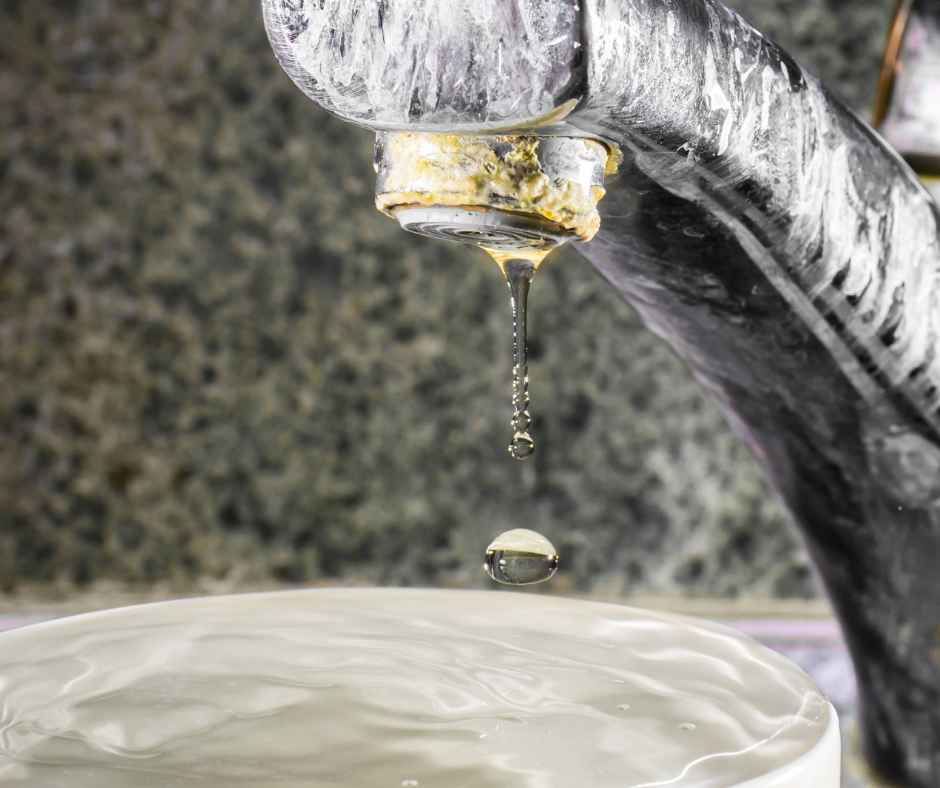
- White, Chalky Buildup: Also known as limescale, this crusty residue typically appears on your showerheads, faucets, and around the base of your kitchen sink. If you find yourself constantly scrubbing white spots that return just days later, your water hardness is likely high.
- Low Water Pressure: If your morning shower feels more like a drizzle than a downpour, mineral deposits may be clogging the small aerators in your fixtures or narrowing the internal diameter of your pipes.
- Spotted Dishes and Glassware: Hard water prevents soap from lathering and rinsing properly. If your glasses come out of the dishwasher with a cloudy film or white “water spots,” it is a clear indicator of mineral residue.
- Noisy Water Heaters: When sediment builds up at the bottom of a traditional water heater tank, you may hear popping, rumbling, or banging sounds. This occurs as steam bubbles struggle to escape through the layer of hardened minerals.
- Stiff, Dull Laundry: Minerals bind to the fibers of your clothes and towels, making them feel scratchy and causing colors to fade prematurely. You may also notice that your whites look dingy or gray.
- Dry Skin and Itchy Scalp: Hard water strips your skin of its natural oils, leaving behind a microscopic film of soap scum. This often leads to persistent skin irritation and hair that feels brittle or difficult to manage.
The High Cost of Inefficiency: Appliances and Your Wallet
Hard water is a silent drain on your household budget. While you might only notice the cosmetic issues at first, the real damage happens where you cannot see it: inside your expensive appliances. In Maryland, where water hardness can be significant, the financial impact of mineral buildup is twofold. It simultaneously increases your monthly utility bills and shortens the lifespan of your appliances, forcing you to pay for replacements years earlier than expected.
The most dramatic impact is seen in your water heater. Because minerals settle on the heating elements, they create an insulating crust that the heat must penetrate before it can reach the water. This inefficiency leads to staggering statistics:
- Energy Waste: Scale buildup can reduce the efficiency of a gas water heater by up to 48 percent. This means your unit stays on longer and consumes more fuel just to provide the same amount of hot water.
- Premature Failure: A standard gas water heater that should last 11 years might fail in just five or six years when exposed to untreated hard water.
- Increased Soap Costs: Hard water minerals neutralize the cleaning power of soaps and detergents. Homeowners with hard water often use up to 50 percent more laundry detergent and 70 percent more dishwasher soap to achieve the same level of cleanliness as those with soft water.
- Appliance Lifespan Reductions: Dishwashers and washing machines typically see their lifespans cut by 30 percent. The abrasive minerals wear down internal seals, pumps, and valves, leading to frequent leaks and mechanical breakdowns.
When you factor in the cost of extra soap, higher energy bills, and frequent appliance replacements, hard water can cost the average Maryland family over $800 per year. Investing in water treatment is not just about convenience; it is a strategic move to protect your home’s most expensive mechanical systems.
Solutions: From Descaling to Whole-Home Water Softeners
If you are dealing with the effects of Maryland’s hard water, you have several options ranging from quick DIY fixes to permanent whole-home solutions. The right choice depends on the severity of the mineral concentration in your specific area and whether you want to simply manage the symptoms or eliminate the cause entirely.
Here is a breakdown of the most effective ways to combat hard water:
- DIY Descaling: For minor buildup on faucets and showerheads, use white vinegar to dissolve calcium carbonate. Soaking a showerhead in a bag of vinegar overnight can often restore the spray pattern by breaking down the crusty white residue.
- Professional Water Heater Flushing: Since the water heater is the “ground zero” for scale buildup, having a professional plumber flush the tank annually is essential. This process removes the accumulated sediment that settles at the bottom, restoring efficiency and preventing the tank from overheating.
- Salt-Based Water Softeners: The gold standard for Maryland homes with very hard water. These systems use a process called ion exchange to physically remove calcium and magnesium ions from your water, replacing them with a tiny amount of sodium or potassium. This results in truly “soft” water that lathers easily and prevents scale from ever forming.
- Salt-Free Water Conditioners: If you are on a salt-restricted diet or prefer a low-maintenance option, a conditioner might be the right fit. Instead of removing the minerals, these systems use template-assisted crystallization to alter the mineral’s chemical structure so they cannot stick to your pipes or appliances.
- Reverse Osmosis (RO): For those who want the purest possible drinking water, an RO system can be installed at the kitchen sink. This uses a semi-permeable membrane to filter out nearly all dissolved solids, including the minerals that cause hardness.
Choosing between a softener and a conditioner often comes down to a professional water test. At Prime Plumbing, we can help you determine the exact “grains per gallon” hardness level of your water and recommend a system that fits both your home’s needs and your budget.
Protecting Your Maryland Home’s Plumbing
Living with hard water is a reality for most Maryland residents, but it does not have to be destructive. By understanding the “invisible” threat posed by calcium and magnesium, you can take proactive steps to safeguard your home. Whether you choose a regular maintenance schedule or invest in a whole-home water treatment system, the goal is to stop mineral buildup before it leads to a midnight plumbing emergency.
At Prime Plumbing, we specialize in helping homeowners in Baltimore, Glen Burnie, and surrounding counties manage their water quality. From testing your mineral levels to installing the latest in high-efficiency softening technology, our team is dedicated to extending the life of your plumbing system. Don’t let Maryland’s hard water dictate the lifespan of your appliances.
Contact us today for a comprehensive water evaluation and take the first step toward a cleaner, more efficient home.
Frequently Asked Questions
How hard is the water in the Baltimore and Glen Burnie area?
The water in the Baltimore metropolitan area is classified as “very hard,” typically averaging around 185 PPM (mg/L) or roughly 11 grains per gallon. In Glen Burnie and across Anne Arundel County, hardness levels can vary by aquifer, but many residents experience “hard” to “very hard” water that requires treatment to prevent scale damage.
Is it safe to drink hard water?
Yes, hard water is perfectly safe to drink and can even provide a small portion of your daily calcium and magnesium requirements. The “risk” of hard water is purely structural and financial.
How can I tell if I have hard water without a laboratory test?
Look for “white crust” on your showerhead, spots on your clean dishes, and soap that doesn’t bubble easily in the shower. If your skin feels dry or your laundry feels scratchy, these are common physical symptoms of high mineral content in your Maryland home.
Will a water softener pay for itself?
In many cases, yes. By preventing scale buildup in your water heater, you can save up to 25% on your energy bills. Additionally, soft water requires significantly less soap and detergent, and your appliances (like dishwashers and washing machines) can last up to 30% longer, which often covers the cost of the system over several years.
What is the difference between a water softener and a water conditioner?
A water softener physically removes the minerals using salt and ion exchange, giving you that “slippery” soft water feeling. A conditioner (or descaler) does not remove the minerals but changes their structure so they cannot stick to your pipes. Conditioners are a great salt-free alternative if you are primarily concerned about protecting your plumbing from scale.
WHAT TO EXPECT
The Difference With Prime
Get a FREE second opinion on water and sewer service, and septic repair/replacements!
Don’t Just Take Our Word for it
More Reviews

Why Choose Prime Plumbing?
Professional Services at an Affordable Price
- Transparent Pricing
- No Additional Charges for Overtime
- Flexible Financing Solutions
- Thorough Employee Background Checks
- Complimentary Second Opinions
Learn More